When your trees lose their color, they are losing their ability to feed themselves. Our specialized recovery programs target the root cause of nutrient lockout, preventing decline before it leads to a costly removal.
Chlorosis is more than an aesthetic issue—it’s a metabolic crisis. In Eugene, our unique soil chemistry often "locks" vital minerals away from your trees. Watch for these red flags in your landscape:
At Eugene Tree Health Care, we don't just guess which nutrient is missing. We use a multi-pronged approach to unlock your tree's potential.
Eugene’s soils can often be too alkaline for sensitive species like Maples and Oaks. We apply specialized sulfur-based amendments to lower the pH, making the iron and manganese already in the soil "available" for the roots to drink.
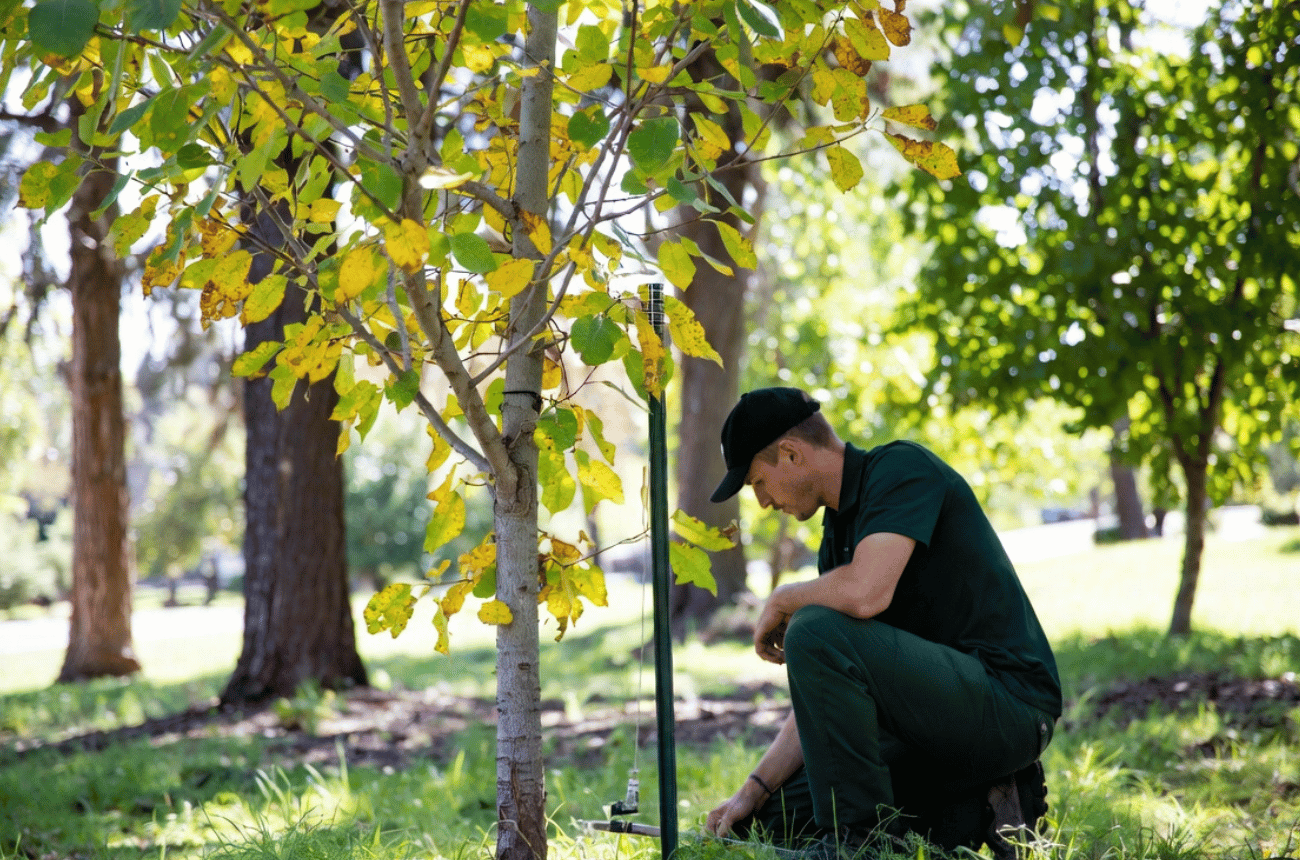
For immediate results, we bypass the soil entirely. By injecting chelated iron and manganese directly into the tree's vascular system, we provide a "shot of adrenaline" that can begin restoring green color in a matter of days.
Nutrient lockout is often caused by a lack of oxygen in our heavy Eugene clay. We use pneumatic air-spading to fracture the soil, allowing roots to breathe and absorb minerals more efficiently.
In acute cases, we apply a nutrient-rich mist directly to the canopy. This provides an instant boost of chlorophyll-producing minerals that the leaves absorb through their pores for a rapid visual recovery.
Restoring a chlorotic tree is a journey from diagnosis to long-term stability.
The Deliverable: You receive a Tree Vitality Roadmap, detailing the specific nutrient deficiencies found and a long-term maintenance schedule to prevent future yellowing.
Restoring color to a dying tree requires a deep understanding of Willamette Valley geology and arboriculture.
Our local "Eugene Silt" and heavy clay pockets are notorious for causing iron chlorosis in non-native and even some native species. At Eugene Tree Health Care, we know the neighborhoods—from the South Hills to the River Road area—where soil pH is most likely to "starve" your trees. We use this local knowledge to provide treatments that aren't just a "quick fix," but a long-term solution calibrated to the unique chemistry of Lane County.
Trunk injections often produce a noticeable "green-up" within 10 to 14 days. Soil-based treatments take longer—usually a full growing season—but provide much more stable, long-term results.
Standard lawn fertilizers often don't contain the specific micronutrients trees need, or high soil pH may be "locking" those nutrients away so the roots can't grab them.
Most residential treatments are completed in 1 to 2 hours. Our methods are clean and non-invasive, meaning your yard stays tidy throughout the process.
Trunk injections typically last 2 to 3 years. However, our goal is to fix the soil chemistry so the tree can feed itself naturally, which may require periodic maintenance.
If the tree has reached the stage of "dieback" (dead branches at the top), it is more difficult. However, as long as the tree is still producing leaves, there is a very high chance of recovery.
Yes. Our trunk injections are contained entirely within the tree, and our soil amendments are professional-grade organic or mineral-based products with no surface residue.