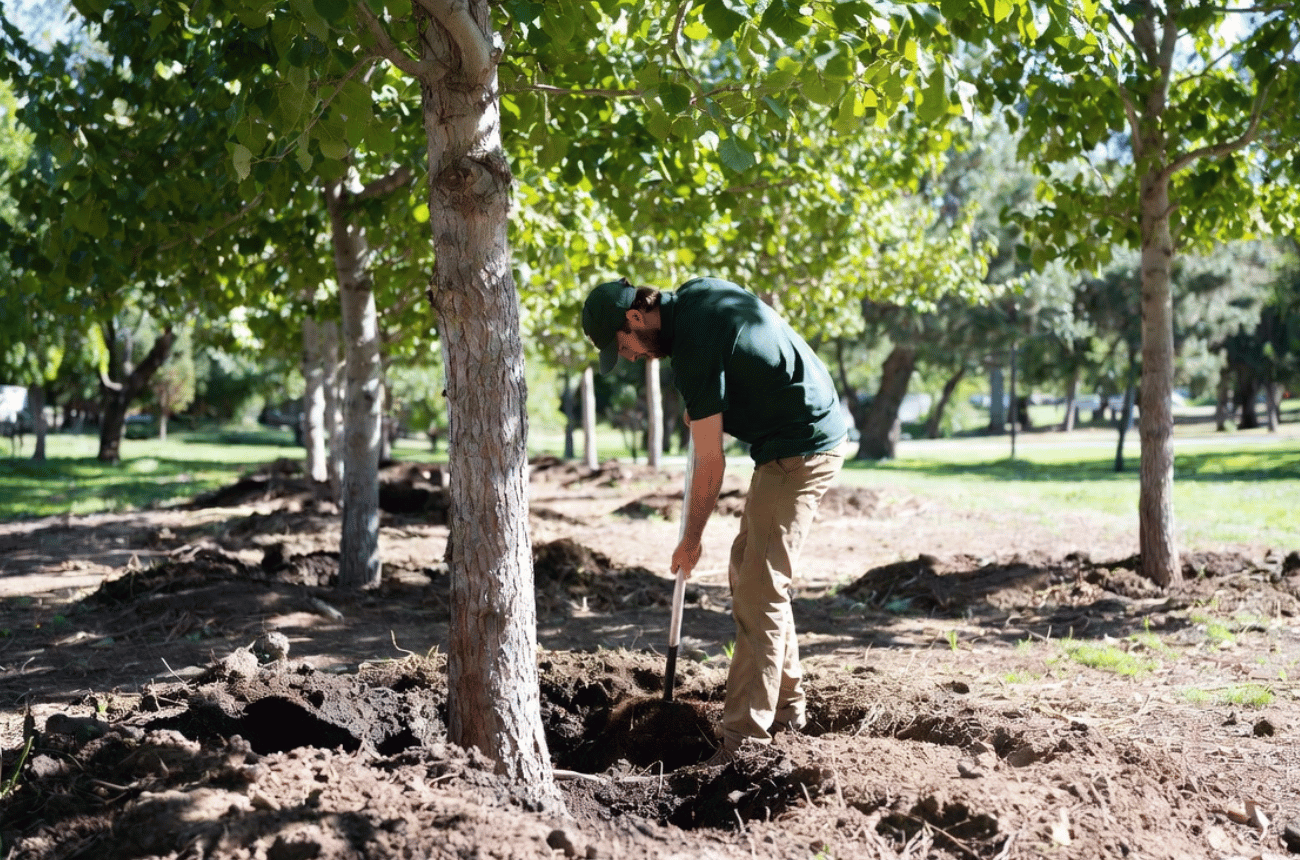
Compacted soil is a silent suffocator; our advanced air-technology restores the vital oxygen and pore space your trees need to thrive without ever touching a shovel.
In Eugene’s urban environments, foot traffic, heavy machinery, and our natural clay content can "pave" the earth over your tree’s roots. If you notice these symptoms, your soil is likely under pressure:
At Eugene Tree Health Care, we use specialized pneumatic tools to revitalize your soil structure while keeping your tree’s delicate root system 100% intact.
We use high-velocity compressed air to "fluff" the soil in a radial pattern. This instantly shatters compaction and reintroduces oxygen to the root zone without the risk of mechanical damage caused by traditional digging.
For trees in tight urban spaces or near sidewalks, we focus on expanding the usable soil volume. We break up the "hard pan" layer, allowing roots to dive deeper and establish better stability.
We create a network of deep, narrow air pockets throughout the critical root zone. These are backfilled with high-quality organic matter, ensuring long-term aeration and a permanent "breathing" structure for the soil.
Designed for high-value heritage trees, this comprehensive service combines decompaction with the integration of biochar and compost to mimic the rich, airy floor of an old-growth forest.
We transform your landscape's foundation through a clean, scientific, and highly effective workflow.
The Deliverable: Each client receives a Root Zone Vitality Map, detailing the areas treated and a customized 12-month hydration plan to ensure maximum recovery.
When the ground is the problem, you need an expert who understands the unique "Eugene Clay" that defines our valley.
Our heavy, silty-clay soils are notorious for "locking up" after a long winter of rain. At Eugene Tree Health Care, we specialize in the unique geology of the Willamette Valley. We know exactly how to treat the roots of a 100-year-old Oregon White Oak versus a sensitive Japanese Maple, ensuring that the specific biological needs of your local species are met with precision.
Most residential projects take between 2 and 5 hours. This depends on the size of the tree's canopy (the "drip line") and the severity of the soil compaction we encounter.
The air-spade will lift the turf in the area being treated. While the grass may need to be re-seeded or replaced with mulch (which is better for the tree!), the long-term health of your tree is significantly improved.
Since we use a high-powered air compressor, there is a moderate amount of noise during the active "spading" portion of the job. We work efficiently to minimize the duration of the sound for you and your neighbors.
Yes! One of the biggest benefits of air-decompaction is that it is non-destructive. It can safely blow soil away from foundations, pipes, and wires that a backhoe or shovel would destroy.
For most residential trees, a single thorough treatment can last 5–10 years, provided that heavy machinery is kept off the area and a proper mulch layer is maintained.
We recommend decompaction when the soil is moist but not saturated. In Eugene, the "sweet spots" are typically mid-spring or early autumn, when the tree is actively growing new roots.