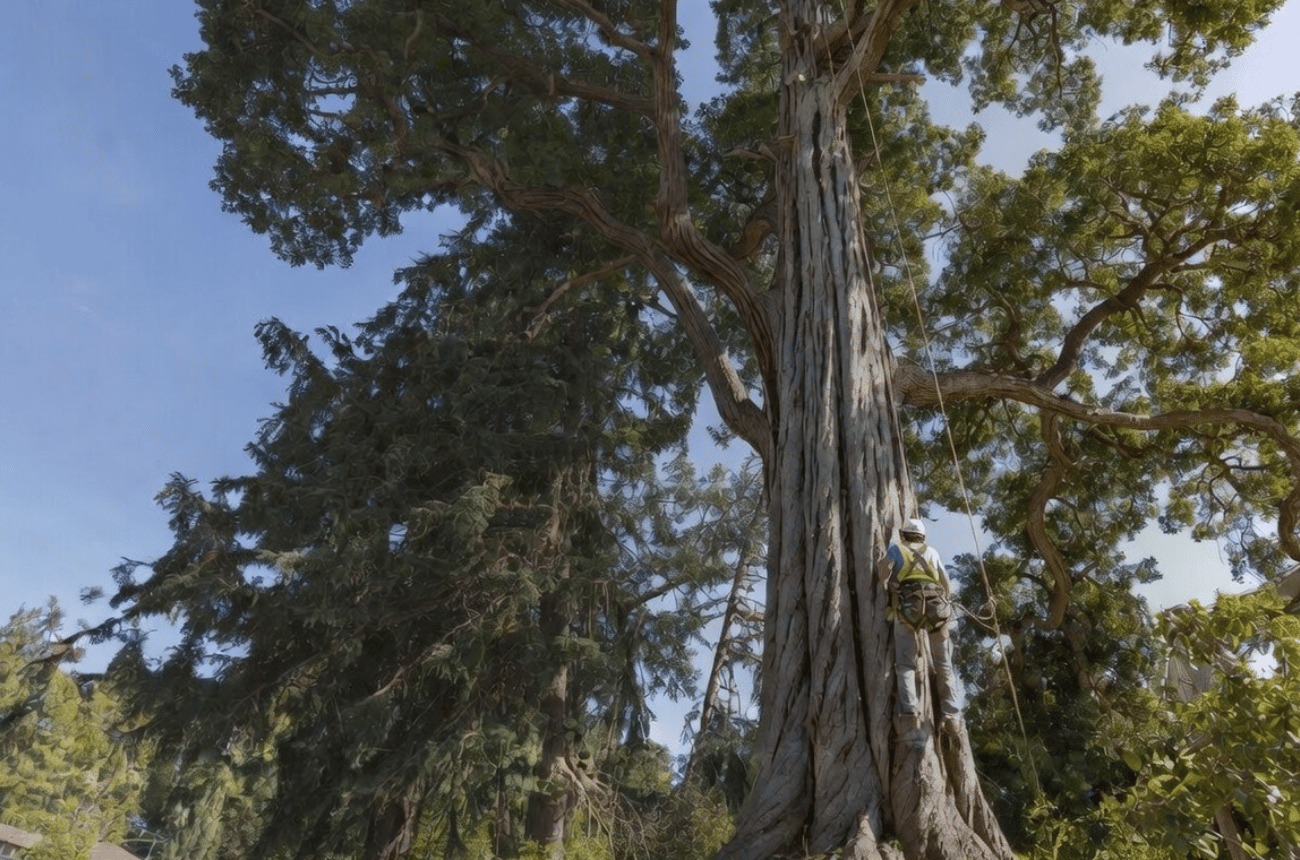
Don't wait for the next Oregon storm to reveal a hazard; proactive evaluations identify structural flaws before they become costly emergencies.
Trees often provide subtle clues before they fail. If you’re losing sleep over a leaning trunk or a creaking branch, watch for these high-risk indicators:
At Eugene Tree Health Care, we follow the industry-standard ISA Best Management Practices to provide tiered levels of scrutiny based on your specific needs.
A rapid "drive-by" or walk-through inspection of a large population of trees. We identify obvious high-risk defects to help property managers prioritize their maintenance budget.
Our most popular service. A 360-degree, 100% visual inspection of the individual tree’s crown, trunk, and root flare using simple tools to probe for decay and structural irregularities.
When a Level 2 assessment is inconclusive, we go deeper. This can include aerial inspections by a climbing arborist or sonic tomography to "see" the density of the wood inside the trunk.
We take the guesswork out of tree safety with a structured, transparent journey.
The Deliverable: You receive a Professional Tree Risk Report, a formal document featuring photos, findings, and prioritized recommendations that can be shared with insurance providers or HOAs.
In the Pacific Northwest, tree failure is often a matter of "when," not "if." You need an expert who understands the unique physics of our local giants.
Our team has spent decades studying how Eugene’s specific weather patterns—from the "Ice Storms" to our saturated winter soils—affect different species. We know that a Douglas-fir behaves differently than an Oregon White Oak under stress. Eugene Tree Health Care combines this local intuition with rigorous data to ensure you never remove a healthy tree out of fear, or keep a dangerous one out of ignorance.
A standard Level 2 evaluation for a single tree usually takes 45 to 60 minutes. Multi-tree properties or Level 3 assessments will require additional time, which we will estimate during booking.
Not always! Many risks can be mitigated through professional pruning, weight reduction, or the installation of supplemental support systems like cables and braces.
Yes. Our reports are written by ISA TRAQ-qualified arborists and follow the standardized format recognized by insurance adjusters, real estate professionals, and municipal courts.
In emergency "failure" situations, our focus shifts to safe removal. Risk evaluations are intended for standing trees to prevent such accidents from happening in the first place.
We recommend a professional evaluation every 2 to 3 years for mature trees, or immediately following a major "weather event" like a significant windstorm or heavy snow.
An estimate is a quote for a specific service (like pruning). An evaluation is a professional diagnostic service where you pay for an expert’s time and unbiased data to determine if service is even needed.