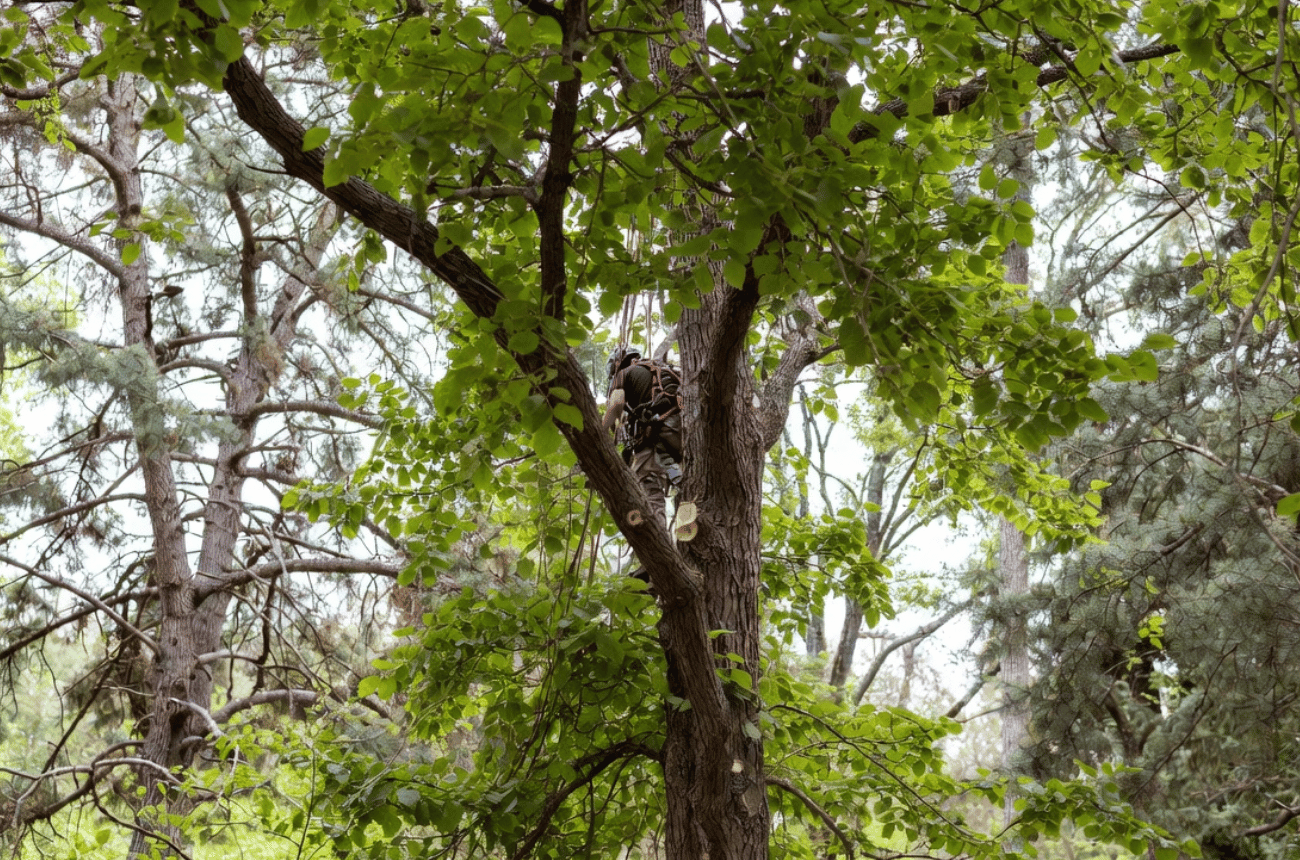
Professional canopy structural care uses advanced diagnostics to identify hidden weaknesses, allowing you to strengthen your trees today instead of clearing debris tomorrow.
Structural instability often hides in plain sight. If your canopy shows any of the following symptoms, a professional structural review is the only way to ensure safety.
We provide a tiered approach to structural care, moving from visual data collection to high-tech internal diagnostics.
A comprehensive ground-to-crown visual inspection. We evaluate the trunk, root flare, and scaffold branches to identify immediate hazards and structural abnormalities.
Think of this as an "ultrasound" for your tree. We use sound waves to map the internal density of the trunk, identifying hollows or decay that are invisible to the naked eye.
For high-value heritage trees, we calculate how the canopy catches wind. This allows us to prescribe exact thinning or cabling measures to reduce "sail area" and prevent uprooting.
Unlike "topping," this specialized pruning focuses on subordinate branch development. We train the tree to grow a strong central leader and balanced weight distribution for long-term health.
We’ve refined our process to be as thorough as it is efficient, ensuring you have the data you need to make informed property decisions.
The Deliverable: You will receive a Canopy Health & Risk Profile—a detailed document that can be used for insurance records, property appraisals, or municipal permit applications.
We don’t just work on trees; we advocate for them using the highest professional standards in the industry.
Eugene's unique climate—characterized by saturated winter soils and heavy ice events—requires a specific brand of expertise. Our team understands how Oregon White Oaks and Douglas-firs respond to local wind patterns and "heavy snow loading." We apply this localized knowledge to every assessment, ensuring your canopy is prepared for exactly what an Oregon winter will throw at it.
A standard residential assessment for 1–3 trees typically takes 60 to 90 minutes. If we are using sonic tomography or advanced mapping, it may take longer.
Not at all. While pruning is a tool we use, structural care is an engineering-first approach. We look at physics, weight distribution, and wood density before a single cut is made.
Yes. We utilize resistograph testing and sonic tomography to look inside the tree. These tools allow us to "see" decay while keeping the protective bark and wood intact.
Often, yes. Having a certified risk assessment on file shows your insurer that you are proactively managing hazards, which can be vital if a major storm event occurs.
We ask that you clear the area directly under the canopy "drip line" so our arborists can safely inspect the root flare and move equipment around the trunk.
For mature or high-value trees in Eugene, we recommend a professional structural review every 2 to 3 years, or immediately following a significant weather event like an ice storm.