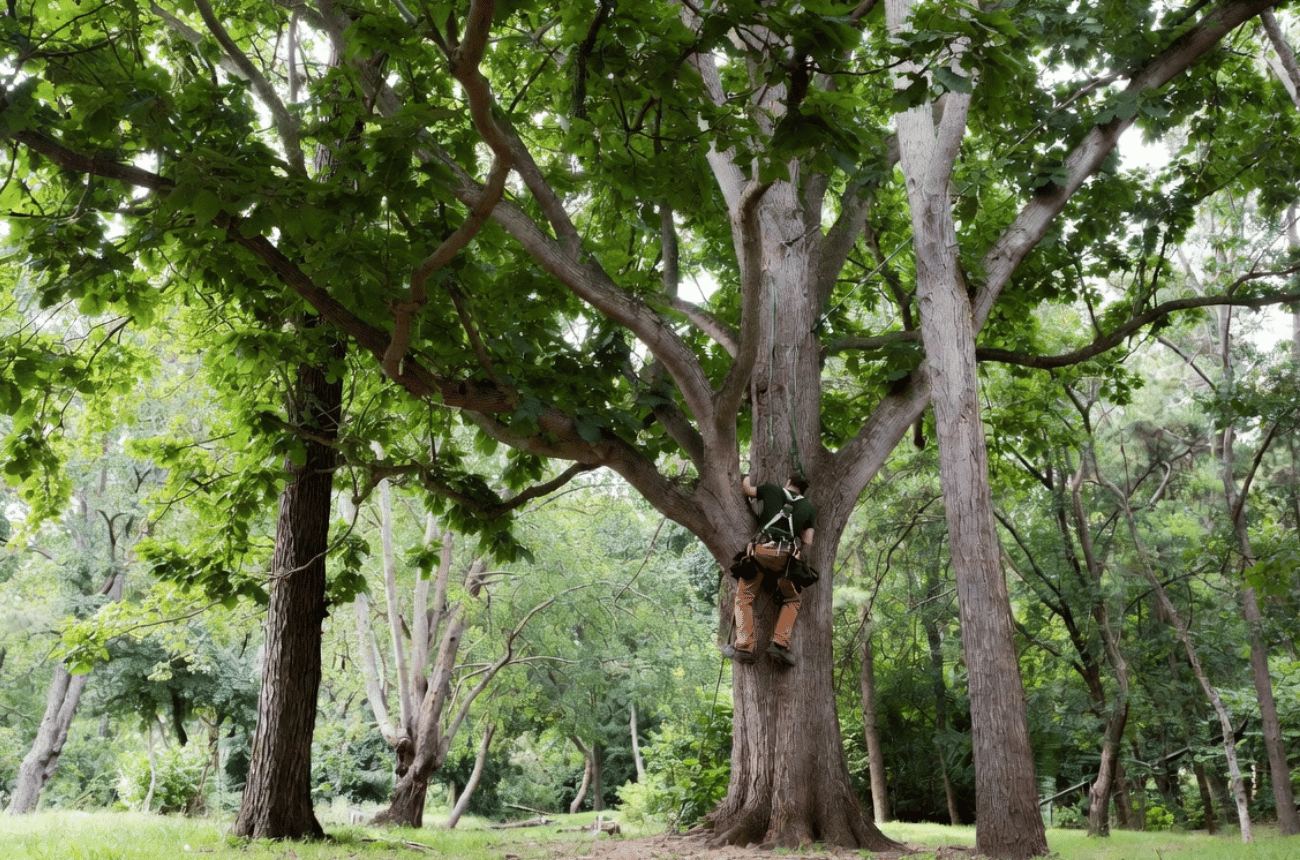
Proactive structural reinforcement costs a fraction of an emergency removal; we identify and secure vulnerabilities before the wind starts to howl.
Eugene’s legendary wind gusts and heavy ice loads can turn a beautiful tree into a property hazard in seconds. If you recognize these red flags, your trees are at high risk during the next "Pineapple Express":
At Eugene Tree Health Care, we specialize in "storm-proofing" your landscape through advanced arboricultural engineering.
We selectively remove interior branches to allow wind to pass through the canopy rather than pushing against it. This significantly reduces the "sail effect" and the likelihood of the entire tree uprooting.
For trees with split trunks or heavy overextended limbs, we install high-strength cables. These act as a "seatbelt" for your tree, limiting the distance branches can sway and preventing structural failure.
In cases where a trunk has already begun to split, we use threaded steel rods to bolt the sections together. This rigid support provides the internal strength the tree needs to withstand heavy ice accumulation.
By strategically removing weight from the ends of long, heavy branches, we move the "center of gravity" back toward the trunk, making the tree much more balanced and stable during turbulent weather.
We follow a systematic approach to ensure your property is prepared for whatever the Willamette Valley throws at it.
The Deliverable: Each client receives a Storm Preparedness Certificate, documenting the work performed and providing a professional record for your homeowner's insurance.
In Lane County, we don't just get rain; we get heavy ice, wet snow, and high-velocity winds. You need a team that knows the local weather patterns as well as the trees.
From the giant Douglas-firs in the South Hills to the silver maples lining our city streets, we understand how local species react to our specific climate. Eugene Tree Health Care combines years of local experience with modern structural science to protect the trees we love and the homes we live in. We don't just react to storms; we help you outsmart them.
A typical residential assessment takes about 45 to 60 minutes. During this time, we can evaluate multiple trees and provide a prioritized list of any necessary structural work.
Cables and braces are long-term solutions, but they do require periodic inspections (every 1–3 years) to ensure the hardware is still under the correct tension as the tree grows.
Ideally, you should schedule your assessment in the late summer or early fall before the "big winds" of November arrive. However, deadwooding and cabling can be performed year-round.
Not when done correctly. We follow a "less is more" philosophy, focusing on interior thinning that maintains the natural beauty of the tree while vastly improving its safety.
While we can significantly reduce the risk of failure through science-based pruning and cabling, nature is unpredictable. Our goal is to shift the odds heavily in your favor.
While most policies cover damage after a storm, they rarely cover preventative maintenance. However, documenting proactive care can sometimes help with your claims process if a "once-in-a-century" event occurs.