As Willamette Valley summers become longer and hotter, proactive moisture management is the only way to prevent permanent vascular damage and the costly removal of parched trees.
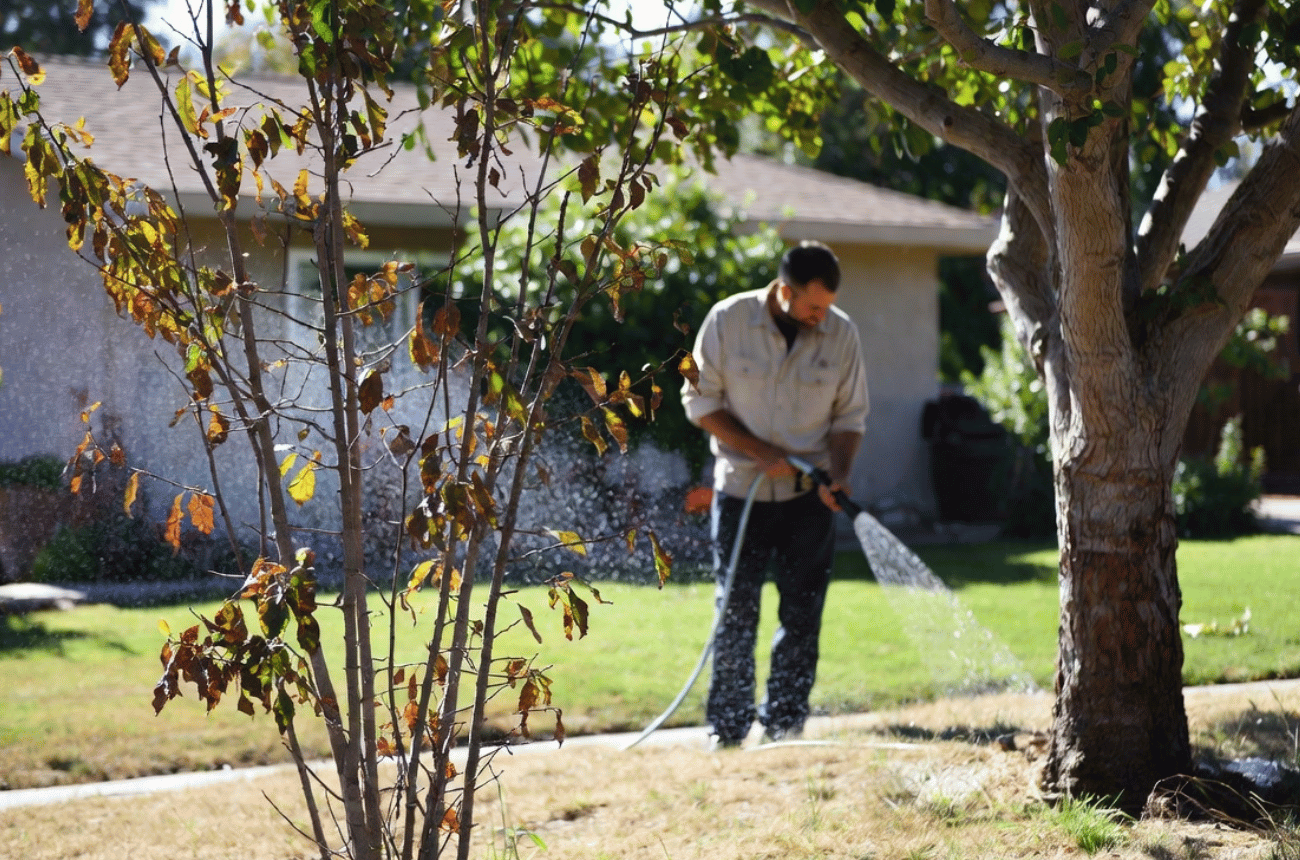
Drought stress is often a "silent" decline that begins deep within the tree's tissue long before the leaves turn brown. Watch for these critical warning signs during Eugene's dry months:
At Eugene Tree Health Care, we go beyond the garden hose. We use physiological science to help your trees retain every drop of moisture.
We apply a specialized, organic coating to the leaves that reduces the amount of water lost through natural evaporation (transpiration). This "invisible armor" helps the tree maintain internal pressure during 90°F+ days.
Using high-pressure soil injections, we introduce "wetting agents" or hydrogels into the root zone. These substances break the surface tension of Eugene’s hard-packed clay, allowing water to penetrate deeper and stay there longer.
By applying specific Tree Growth Regulators (TGRs), we trigger the tree to redirect energy from "thirsty" canopy growth into root hair development. This increases the tree's "straws" in the ground while reducing its water demand.
We install professional-grade, arborist-quality mulch at the precise depth required to insulate roots from ground heat. This can reduce soil temperature by up to 10°F and cut evaporation by 70%.
Our drought mitigation strategy is designed to be efficient and effective, preparing your trees for the peak of the heat.
The Deliverable: Each client receives a Watering Roadmap, a customized document detailing the specific hydration needs of your trees and a log of the moisture-retention treatments applied.
With our local expertise, we help Eugene's urban forest adapt to the changing Pacific Northwest climate.
We understand that a Western Red Cedar in the South Hills has very different drought tolerances than an Oregon White Oak on the valley floor. Eugene Tree Health Care specializes in the "flash droughts" common to Lane County, where we pivot from a wet spring to a bone-dry summer in a matter of days. We use this local knowledge to time our treatments perfectly, ensuring your trees have their defenses up before the first heat dome arrives.
Most residential treatments are completed in 1 to 2 hours. Because we use liquid injections and foliar mists, there is zero digging or disruption to your landscape.
If the tree is in the "early wilt" stage, we can often stop the decline. However, if the vascular system has "embolized" (snapped like a dry straw), recovery may not be possible. Early intervention is key.
Yes. Our foliar shields are made from natural pine resins or organic polymers. They are non-toxic to pets, children, and the beneficial insects that live in your canopy.
For maximum protection, we recommend applying drought-resilience treatments in late spring or early summer, just before the soil moisture begins to drop significantly.
By improving the soil's ability to hold water and the tree's ability to retain it, you can often water less frequently while achieving better results for your tree’s health.
No. These services are "force multipliers"—they make your watering much more effective. Think of it as upgrading your tree's gas tank so it can go much further on the same amount of fuel.