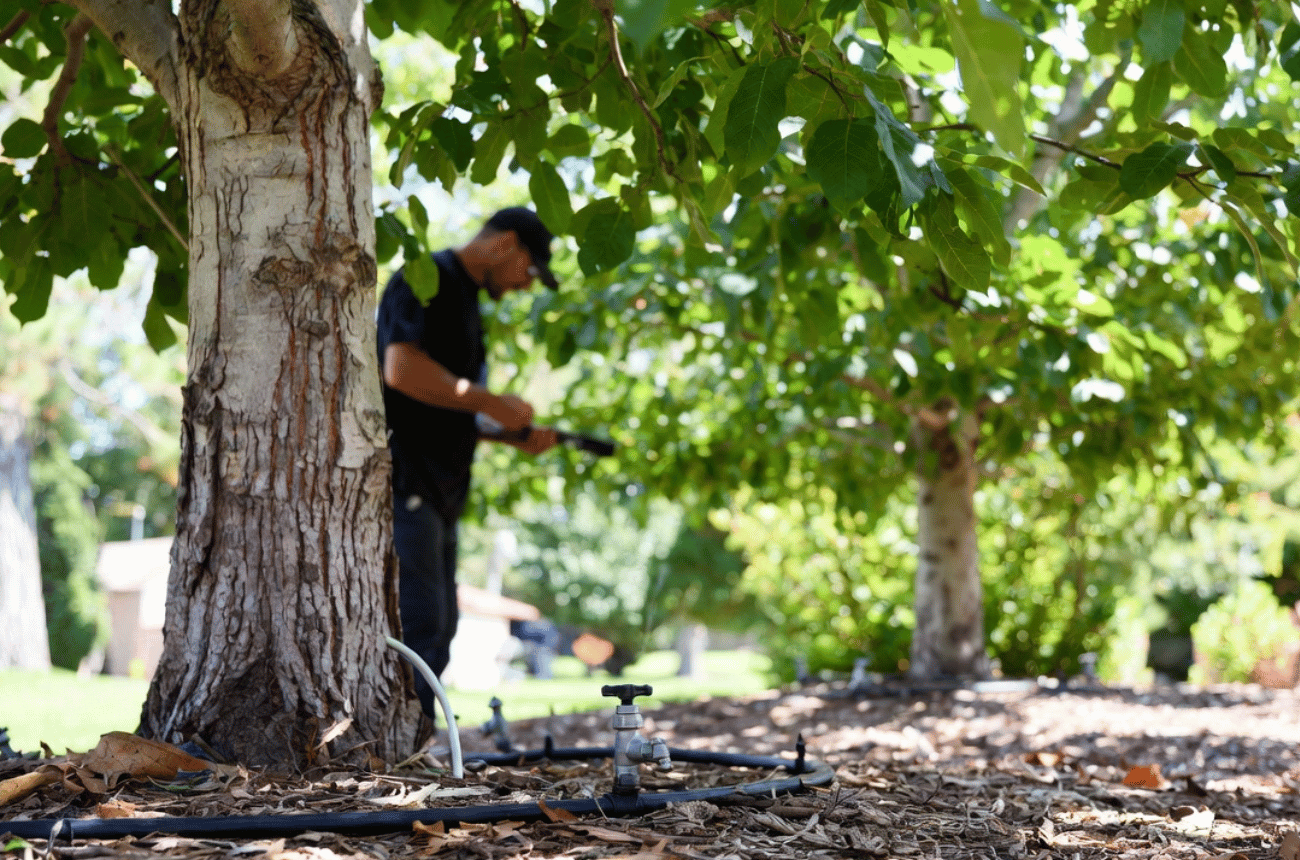
Most irrigation systems are designed for grass, not trees. Our expert evaluations transform wasteful watering into a targeted hydration strategy that prevents root rot and drought stress before they become fatal.
Trees have vastly different hydration needs than a standard lawn. If your irrigation setup hasn't been professionaly audited, you might be seeing these silent distress signals:
At Eugene Tree Health Care, we bridge the gap between landscape plumbing and tree biology to ensure every drop of water supports long-term health.
We map out exactly where your tree's active "feeder roots" are located. We then assess if your current emitters are placed to reach those roots or if you're simply watering the grass and missing the tree.
Using tensiometers and moisture probes, we measure how deep your irrigation actually penetrates Eugene’s heavy clay. We identify "dry pockets" that can cause a tree to lean or fail during high-wind events.
Many systems use the wrong heads for trees. We evaluate your current hardware—from drip lines to rotors—to ensure the volume and pressure are appropriate for the age and species of your canopy.
We help you group plants with similar water needs together. By separating "thirsty" ornamentals from "drought-tolerant" native oaks, we optimize your water bill and prevent over-saturation.
We provide a clear, scientific path to optimizing your property's water usage.
The Deliverable: You receive a Precision Irrigation Blueprint, featuring a customized seasonal watering schedule and a "Troubleshoot Map" of hardware fixes required to protect your trees.
In Eugene, managing water is a balancing act between our saturated winters and our increasingly parched, dry summers.
Our local Eugene clay soils hold moisture differently than the sandy soils of the coast or the volcanic soil of the Cascades. Eugene Tree Health Care understands the "drainage debt" common in neighborhoods like the South Hills and the River Road area. We know how to adjust for the local microclimates that affect our native Douglas-firs and Bigleaf Maples, ensuring your irrigation plan is as unique as your property.
Lawn sprinklers are designed for shallow roots (2–4 inches). Trees need deep, infrequent "soaks" that reach 12–18 inches down. Using lawn cycles for trees often leads to shallow, unstable root systems.
A standard residential evaluation typically takes 60 to 90 minutes, depending on the number of irrigation zones and the size of the property.
We specialize in the biological evaluation and consulting. We provide the "prescription" for your system, and we can either work with your existing landscaper or recommend a preferred irrigation contractor to execute the hardware changes.
Absolutely. Most systems we audit are over-watering by 30% or more. By targeting the water where it’s actually needed, you reduce waste and lower your monthly utility costs.
While summer is the "stress season," spring is the best time for an evaluation. It allows us to set your system correctly before the heat arrives, ensuring your trees have a deep reservoir of moisture to draw from.
Yes. Drip systems are often the biggest culprits of "silent" failure because you can't see when they are clogged or if they've been placed too close to the trunk. We check the flow