Stop guessing what your trees need and start testing; our precision soil diagnostics identify nutrient "lockouts" and structural issues, allowing us to heal your trees from the roots up before costly removal becomes the only option.
Most tree health issues are actually "underground" issues. In Eugene, our heavy clays and urban construction can create a toxic environment for root systems. If you notice these signs, your soil is likely the culprit:
At Eugene Tree Health Care, we go far beyond the basic hardware store test kit. We provide laboratory-grade insights into the chemistry and biology of your land.
We analyze the concentrations of Nitrogen, Phosphorus, and Potassium, along with essential micronutrients like Iron and Manganese. We don't just find out what’s there; we find out what is actually available for your tree to use.
Eugene soils can vary wildly. We test the acidity and alkalinity of your soil to ensure it matches the specific needs of your species—whether it's an acid-loving Blue Spruce or a native Oregon White Oak.
Using penetrometers, we measure soil density. High compaction from foot traffic or construction "squeezes" the oxygen out of the soil, effectively suffocating your tree’s root system.
Healthy soil is alive. We assess the presence of beneficial organic matter and microbial potential, ensuring your soil has the "Wood Wide Web" of fungi necessary to support a massive canopy.
We make the complex science of pedology (soil science) simple and actionable for every homeowner.
The Deliverable: You receive a Soil Vitality Blueprint—a detailed laboratory report and a 12-month roadmap for soil amendments tailored specifically to your property’s unique chemistry.
Understanding the "Eugene Silt" and Willamette Valley clays is a specialty that requires local experience and professional credentials.
In Eugene, we deal with a unique geological mix. From the heavy, poorly-drained clays of the valley floor to the acidic, rocky slopes of the South Hills, your soil is not a "standard" environment. Eugene Tree Health Care specializes in these local variations. we understand how our native Douglas-firs interact with the specific mineral content of Lane County. We don't use generic nationwide data—we use Eugene data to ensure your trees have the foundation they need to reach their full potential.
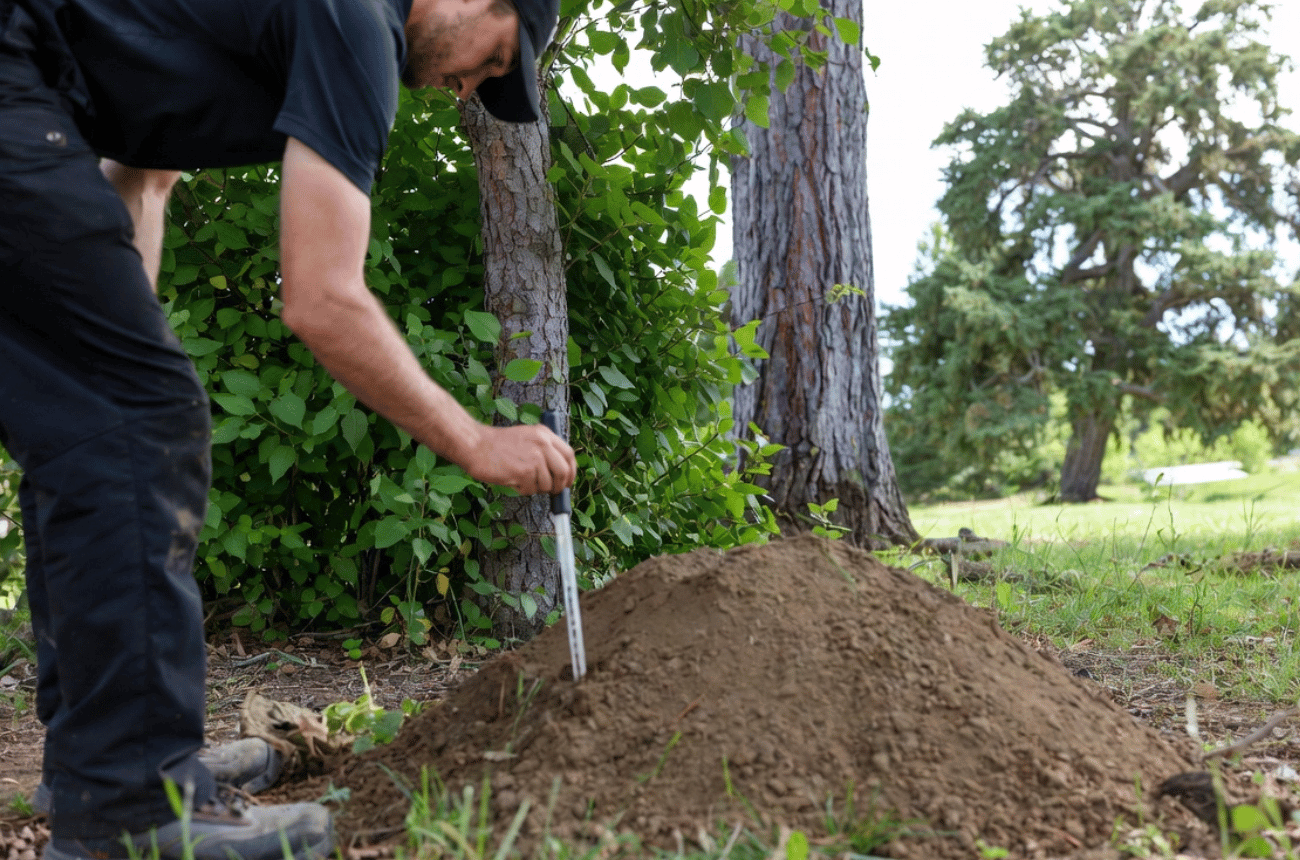
The on-site sampling usually takes 30 to 45 minutes. We take samples from several locations around your trees to ensure we have a representative "picture" of the root zone.
Once the samples are taken, the laboratory analysis and our arborist's interpretation typically take 7 to 10 business days.
DIY kits usually only test for N-P-K (Nitrogen, Phosphorus, Potassium) and are often inaccurate. We test for micronutrients, cation exchange capacity (CEC), and base saturation—data points that are critical for tree longevity.
Usually, no. If your trees are in the same area, one or two "representative" samples will give us the data we need for the entire landscape.
While we can take samples in light rain, we prefer to avoid saturated "muddy" conditions to ensure the structural analysis of the soil is accurate.
For trees showing signs of stress, we recommend an immediate test. For healthy landscapes, a "maintenance check" every 3 to 5 years ensures that nutrient levels aren't slowly depleting.