Understanding how fast your trees are moving allows for precision management—reducing the need for aggressive "emergency" hacking while optimizing the health of your landscape.
Growth rates are the "pulse" of a tree’s health. Whether a tree is growing too quickly or has mysteriously stalled, these indicators suggest you need a professional data check:
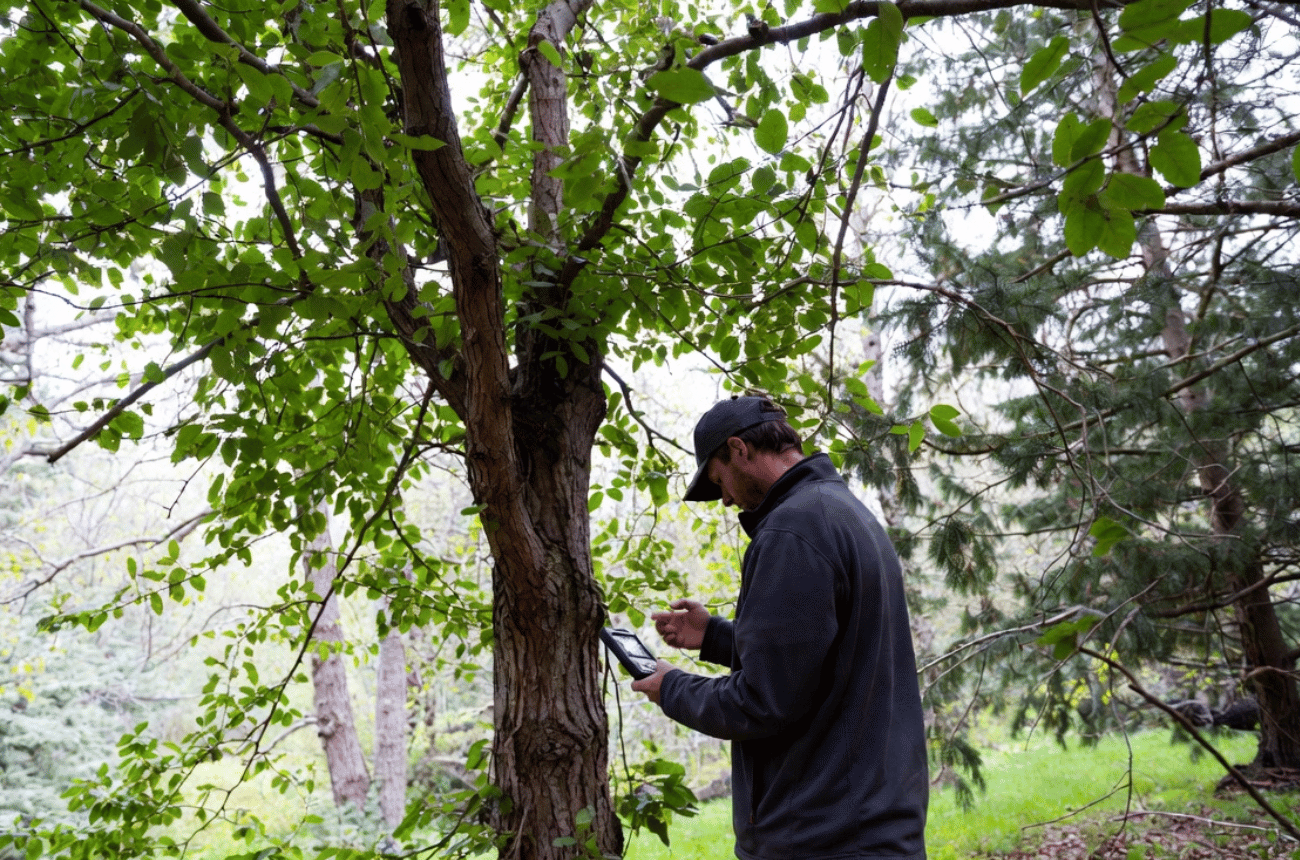
At Eugene Tree Health Care, we use specialized arboricultural tools to track the velocity of your forest, ensuring every management decision is backed by math.
We measure the "internodal" growth of your tree’s canopy over several seasons. This tells us exactly how the tree is responding to the local Eugene climate and whether it is in a state of vigor or decline.
By monitoring the Diameter at Breast Height (DBH) using precision calipers and tapes, we can calculate the biomass accumulation of your trees. This is essential for long-term urban planning and carbon sequestration data.
Using high-tech visual measurements, we track the lateral expansion of your trees. This helps property owners anticipate future conflicts with structures or neighboring trees before they happen.
We compare your tree's current growth data against the established "local averages" for that species in Lane County. This helps us identify "outliers" that may need growth regulators or nutrient boosts.
Our process is methodical and non-invasive, providing you with a clear picture of your tree’s trajectory.
The Deliverable: You receive a Tree Performance Ledger, a detailed report showcasing growth trends, predicted future dimensions, and a 5-year maintenance forecast.
Managing an urban forest in the Willamette Valley requires more than a pair of shears; it requires an understanding of the local "speed of life."
Eugene’s unique combination of wet winters and high-nitrogen spring cycles can cause certain species, like Bigleaf Maples, to put on massive amounts of growth in a single season. At Eugene Tree Health Care, we know the "neighborhood norms" for every street in the city. We understand how the local silt-clays impact the growth of our native Douglas-firs versus exotic ornamentals, allowing us to provide growth data that is perfectly calibrated to your specific micro-climate.
For most mature trees, an annual check is sufficient. For young, establishing trees or trees near power lines, we recommend bi-annual monitoring to catch rapid shifts in canopy volume.
A standard monitoring visit for a single tree takes roughly 30 to 45 minutes. We can assess a dozen trees on a standard residential lot in about two hours.
Yes! By looking at the "scarring" on the branches (terminal bud scale scars), we can often look back 2 to 3 years into the tree's history to establish a historical growth rate.
Growth monitoring is a diagnostic and planning service. While it informs when you should prune, the actual pruning is a separate service. Monitoring helps you avoid unnecessary pruning costs.
A tree growing too fast may have weak wood; a tree growing too slow is likely dying. Monitoring allows us to intervene with the right "medicine" at the right time.
No. As long as our team has access to the trees, we can perform the metrics and email your Tree Performance Ledger directly to you.