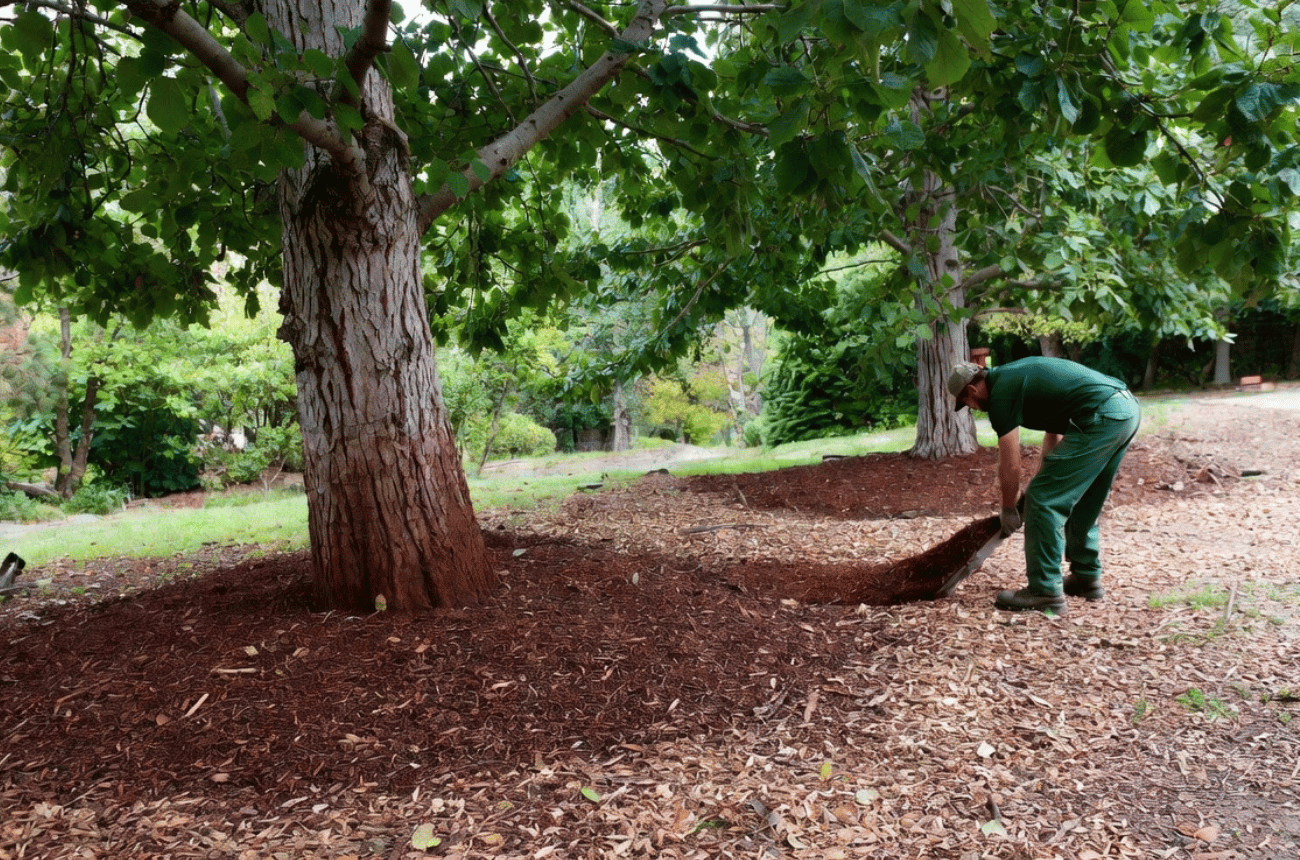
Proper mulching is the single most cost-effective way to mirror a forest floor, retaining vital moisture and suppressing competition to prevent tree decline before it starts.
Mulch is often treated as an aesthetic choice, but for a tree, it is a biological necessity. If your landscape is currently missing this critical layer, you may notice:
At Eugene Tree Health Care, we don't just dump bark; we engineer a root-zone environment designed for maximum health and longevity.
We utilize premium, coarse-ground wood chips that break down slowly. This "natural" mulch provides the perfect carbon-to-nitrogen ratio to feed beneficial soil fungi while regulating ground temperature.
Before applying new material, we ensure the root flare (where the trunk meets the roots) is exposed. We then apply mulch in a "doughnut" shape—never a volcano—to keep the bark dry and the roots hydrated.
For trees in nutrient-poor urban sites, we can blend organic compost or biochar into the mulch layer. This creates a "slow-release" feeding system that improves soil structure as it decomposes.
Landscape fabric often suffocates roots over time. We specialize in removing old, clogged barriers and replacing them with breathable, organic mulch that allows for proper gas exchange and water infiltration.
Our "Tree First" approach ensures that every yard of mulch applied serves a biological purpose.
The Deliverable: Each client receives a Root Zone Maintenance Guide, detailing the specific mulch type used and tips for maintaining the "Donut" shape to ensure lifelong trunk health.
Effective mulching requires an understanding of the Willamette Valley’s unique climate and soil types.
In our region, we deal with heavy winter rains followed by intense summer droughts. We know that a Douglas-fir in the South Hills requires a different mulch depth than a Japanese Maple in a manicured downtown garden. Eugene Tree Health Care uses locally sourced materials that are adapted to our native soil microbiology. We don't just beautify your yard; we preserve the "Wood Wide Web" that keeps Eugene green.
We recommend "arborist chips"—a mix of wood, bark, and leaves. Unlike decorative "beauty bark," arborist chips provide a diverse nutrient profile and promote beneficial fungal growth that trees love.
The "sweet spot" is typically between 2 and 4 inches. Anything deeper can actually prevent oxygen from reaching the roots, while anything shallower won't effectively suppress weeds or retain moisture.
Because organic mulch breaks down and improves your soil (which is a good thing!), we generally recommend a "top-off" every 1 to 2 years to maintain the protective depth.
When applied correctly (kept away from the foundation of your home and not piled against the tree trunk), mulch does not significantly increase pest risk. In fact, it encourages beneficial insects that prey on tree pests.
Most residential mulching projects are completed in 2 to 5 hours, depending on the size of the beds and the accessibility of the yard.
Yes! We use natural, undyed, and untreated wood products. Unlike some bagged store-bought mulches, ours are free of chemical dyes and synthetic "shredded tire" fillers.