How Often Should Trees Be Fertilized in Eugene & Springfield, OR?
How Often Should Trees Be Fertilized in Eugene and Springfield, OR?
Maintaining a vibrant landscape in the southern Willamette Valley requires more than just occasional watering; it requires a scientific approach to soil nutrition. To answer the pressing question: How often should trees be fertilized in Eugene and Springfield, OR? Most young, developing trees should be fertilized annually to support structural growth, while established, mature trees typically require supplemental nutrients every two to three years depending on soil compaction and local environmental stress. In our unique local ecosystem—characterized by heavy Jory clay and high seasonal rainfall—a professional deep root fertilization treatment is often the difference between a tree that merely survives and one that truly thrives.
The Science Behind Soil Nutrition in Lane County
The urban forest in Eugene and Springfield faces challenges that native forests do not. In a natural woodland, decomposing leaf litter recycles nitrogen and minerals back into the earth. In a residential yard, we rake leaves and remove "debris," effectively starving the soil over time.
Why Urban Trees Face Nutrient Deficiencies
Our local development often leads to severe soil compaction. When soil is packed tight by construction or foot traffic, oxygen and water cannot reach the roots, and essential elements like iron and magnesium become chemically "locked" in the clay, unavailable to the tree.
The Role of Rainfall and Leaching
While our famous Oregon rain is great for hydration, heavy winters can actually "leach" or wash away mobile nutrients like nitrogen from the upper layers of the soil. This makes supplemental feeding essential for maintaining a lush, green canopy.
How Often Should Trees Be Fertilized in Eugene and Springfield, OR?
While the general 1-to-3-year rule serves as a baseline, Eugene Tree Health Care uses a "prescription" approach based on the specific needs of your property.
Assessing the Growth Stage of Your Canopy
Younger trees are in a high-energy "building phase." They are trying to establish a dominant leader and a sturdy branch architecture to withstand our winter ice storms. For these trees, an annual spring application is highly recommended. Mature, "legacy" trees have slower metabolisms and may only need a boost every 36 months to maintain their immune systems against local pests.
Seasonal Timing for Maximum Uptake
The best windows for fertilization in Lane County are early spring (before the "bud break") and late fall. Fall fertilization is particularly effective in our region; even as the leaves drop and the tree appears dormant, the roots remain active in our relatively mild soil temperatures, storing energy for a vigorous spring flush.
Professional Methods: Deep Root Fertilization vs. Surface Spreading
Many homeowners attempt to fertilize by throwing granular spikes into the ground. At Eugene Tree Health Care, we advocate for more sophisticated, arborist-grade delivery systems.
The Advantages of High-Pressure Deep Root Injection
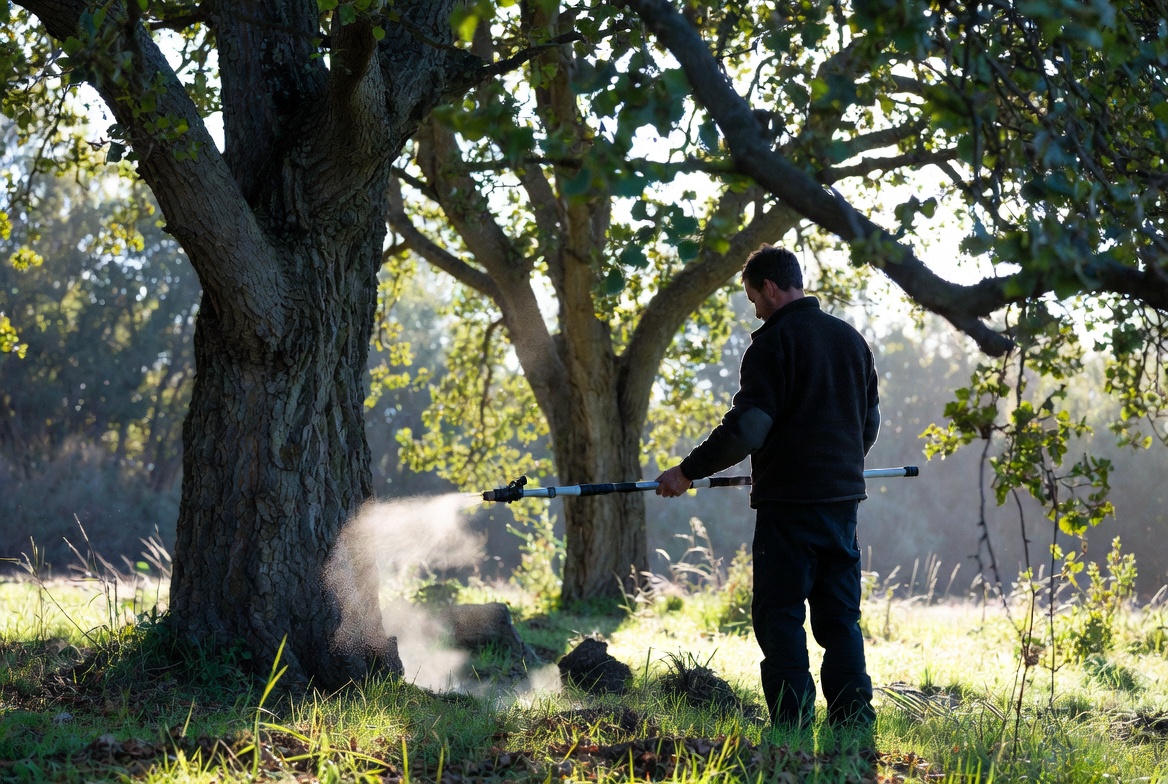
We utilize specialized equipment to inject a liquid "cocktail" of macro and micronutrients 12 to 18 inches below the surface. This method offers several benefits:
- Bypassing Turf Competition: Grass is a "nutrient hog." Deep injection puts the food below the grass roots where the tree can actually reach it.
- Soil Aeration: The high pressure helps break up our stubborn local clay, allowing the roots to "breathe."
- No Runoff: Unlike surface fertilizers, our injections won't wash into the Willamette River during a heavy downpour.
When to Consider Air Spading and Soil Decompaction
If your soil is exceptionally hard, we may recommend Air Spading. This uses compressed air to loosen the soil without damaging the delicate "feeder roots," allowing for a much more effective fertilization process.
Recognizing the Signs of a "Hungry" Tree
If you aren't sure if your landscape is due for a treatment, look for these visual cues:
Visual Symptoms of Nutrient Stress
- Chlorosis: This is the yellowing of leaves while the veins remain dark green, often a sign of iron or manganese deficiency.
- Reduced Leaf Size: If this year’s leaves look significantly smaller than previous years, the tree is likely "rationing" its energy.
- Short Internodal Growth: This refers to the distance between this year’s buds and last year’s. If the tree is growing less than 2–4 inches per year, it needs help.
Frequently Asked Questions About Local Tree Care
Does every tree on my property need the same fertilizer?
No. A Douglas Fir has significantly different metabolic needs than a Japanese Maple or a fruit-bearing cherry tree. We customize our nutrient blends based on the species and the specific pH level of your soil.
Can fertilization help a tree that was damaged in a storm?
Absolutely. Recovering from branch loss requires a massive amount of "stored" energy. Providing a targeted nutrient boost helps the tree seal off wounds and regenerate its canopy faster, reducing the risk of secondary fungal infections.
Is it possible to over-fertilize?
Yes. Too much nitrogen can cause "flush growth" that is weak and spindly. This soft growth is a magnet for aphids and can be easily damaged by a sudden frost. Professional calibration is key to avoiding this.
How does fertilization interact with disease treatment?
A healthy tree is its own best defense. By keeping the "immune system" of the tree strong through proper fertilization, the tree can more effectively fight off local issues like Anthracnose or Root Rot.
What is the difference between fertilizer and a soil conditioner?
Fertilizers provide the "food" (Nitrogen, Phosphorus, Potassium), while soil conditioners (like mycorrhizae or organic bio-stimulants) improve the tree's ability to "digest" that food and absorb water.
Will fertilization make my tree grow too large for my yard?
Proper fertilization focuses on health and density rather than just height. Our goal is to create a structurally sound tree, not just a tall one. We often pair fertilization with structural pruning to manage the size and safety of the canopy.
Why Eugene Tree Health Care is the Right Choice
At Eugene Tree Health Care, we don't just guess—we assess. Our team of experts provides everything from Arborist Consultation & Reports to Tree Trunk Injection Treatments. We understand the local climate of Lane County and the specific stressors our urban trees face. Whether you need Tree Risk Evaluations or Deep Tree Root Fertilization, we deliver skilled craftsmanship and reliable execution.
Eugene Tree Health Care is a trusted choice for residential & commercial tree health plant care in Eugene, Springfield, and Lane County.
Call Us For A Quote: (587) 600-8492

