What Causes Tree Root Damage in Eugene and Springfield, OR?
What Causes Tree Root Damage in Eugene and Springfield?
The health of a tree is an structural reflection of what is happening beneath the soil. In the southern Willamette Valley, root systems are the unsung heroes that anchor our massive Douglas Firs and Maples against Pacific Northwest windstorms. To answer the core concern: What causes tree root damage in Eugene and Springfield? The primary culprits are soil compaction from urban development, invasive construction practices, poor drainage in heavy clay soils, and physical severance during landscaping or utility repairs. Because roots are "out of sight, out of mind," damage often goes unnoticed until the canopy begins to die back or, worse, the tree becomes a structural hazard.
The Silent Struggle of Urban Root Systems
In a natural forest setting, roots spread wide and shallow to breathe. In an urban setting like Eugene or Springfield, they are forced to compete with sidewalks, driveways, and foundations. Understanding the "Critical Root Zone" (CRZ) is the first step in prevention.
Soil Compaction: The Invisible Suffocator
Our local "Jory" and "Bashaw" clay soils are highly prone to compaction. When heavy equipment, or even consistent foot traffic, presses the soil particles together, the pore spaces that hold oxygen and water disappear. Without oxygen, root tissues undergo "asphyxiation" and begin to die, leading to a slow decline of the entire tree.
The Impact of "Hardscaping" and Development
Paving over a root zone with asphalt or concrete doesn't just block water; it traps toxic gases and heat. This creates a hostile subterranean environment that can kill off the fine "feeder roots" responsible for 90% of the tree's nutrient uptake.
Primary Factors: What Causes Tree Root Damage in Eugene and Springfield?
While environmental factors play a role, human activity is the most frequent cause of root failure in Lane County.
Construction and Utility Trenching
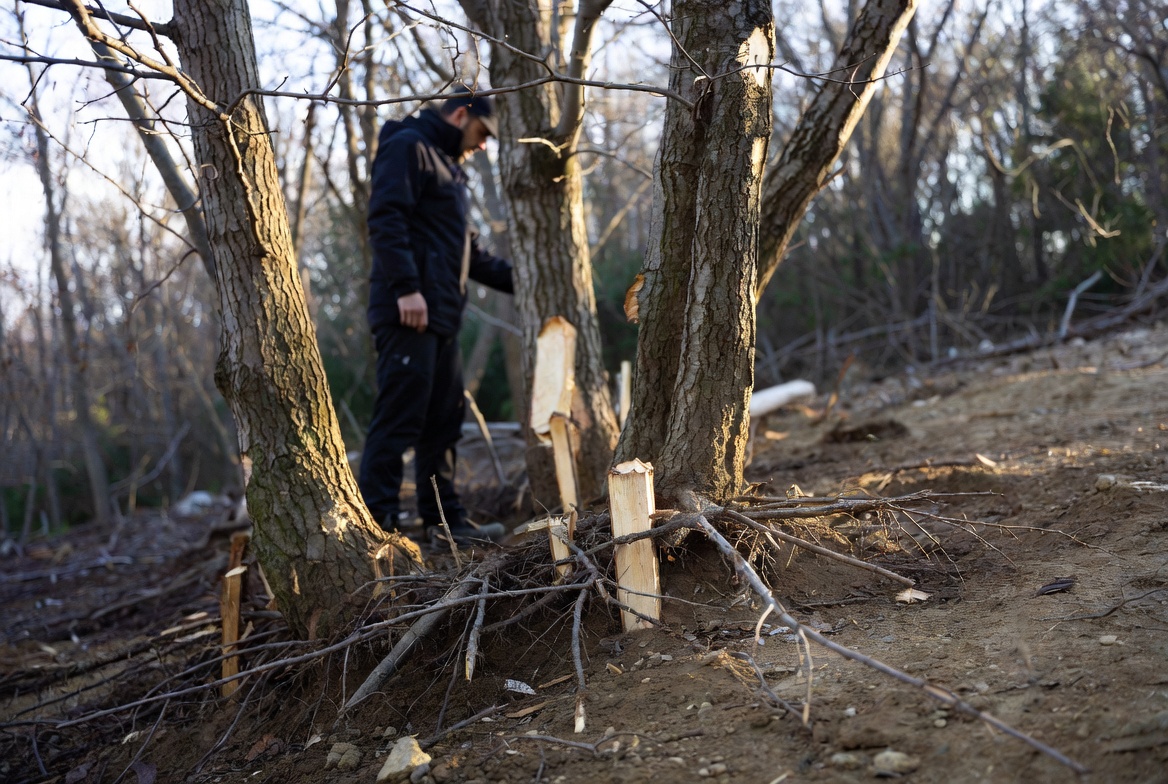
When a new pipe is laid or a sidewalk is repaired, roots are often severed. Cutting a single major buttress root can strip a tree of 25% of its stability and water-gathering capacity. At Eugene Tree Health Care, we specialize in Urban Tree Protection Planning to prevent these "accidental" deaths during home renovations.
Improper Grading and Soil Fill
Adding even four inches of heavy soil over an existing root zone can be fatal. Many homeowners inadvertently "smother" their trees by adding raised garden beds or thick layers of non-porous mulch directly against the trunk flare.
Girdling Roots: The Self-Strangulation Effect
Sometimes the damage comes from the tree itself. In urban environments where space is tight, roots may begin to circle the trunk. As the tree grows, these "girdling roots" act like a slow-motion noose, choking off the flow of sap and nutrients between the canopy and the ground.
Environmental and Pathogenic Root Threats
Beyond human interference, the biology of the Willamette Valley presents its own set of challenges for root health.
Poor Drainage and Root Rot (Phytophthora)
Our wet winters combined with heavy clay can lead to "standing water" in the root zone. This anaerobic environment is the perfect breeding ground for water molds like Phytophthora. This pathogen rots the root tips, making the tree unable to drink even when surrounded by water—a cruel irony of tree biology.
Drought Stress and Soil Cracking
Conversely, our increasingly dry summers cause the clay to shrink and crack. This mechanical shifting can physically tear the fine root hairs. When we provide Tree Root Zone Aeration, we help mitigate these extremes by creating a more resilient soil structure.
Identifying Root Damage Before It’s Too Late
Since you cannot see the roots, you must learn to read the "body language" of the tree.
Signs of Root Distress in the Canopy
- Dieback from the Top Down: If the highest branches are losing leaves, the roots likely can't pump water that high.
- Leaning: A sudden lean, especially with mounded soil on the opposite side, indicates structural root failure.
- Fungal Conks: Mushrooms growing at the base of the trunk or along the root flares are a "smoking gun" for internal root decay.
How Eugene Tree Health Care Protects Your Roots
We utilize advanced technology to diagnose and treat what lies beneath the surface.
Air Spading and Soil Decompaction
We use the Air Spading tool to blow away soil using high-pressure air. This allows us to inspect the roots and decompact the soil without harming the tree, providing a "breath of fresh air" to struggling systems.
Tree Root Zone Aeration and Vertical Mulching
By creating vertical "chimneys" of organic matter in the soil, we improve gas exchange and encourage roots to grow deeper and stronger, far away from the dangers of surface compaction.
Frequently Asked Questions About Local Root Health
Can a tree survive if its roots are cut for a sidewalk?
It depends on the size of the root and the distance from the trunk. We use Arborist Consultation & Reports to determine if the tree can be saved through selective pruning or if it has become a "Tree Risk" that requires removal.
How do I know if my soil is too compacted?
If water pools on the surface for hours after a rain, or if you cannot easily push a screwdriver into the ground, your soil is likely compacted and damaging your tree's health.
Will planting flowers under my tree hurt the roots?
Light gardening is usually fine, but tilling the soil under a tree is extremely damaging. We recommend "Air Spading" to incorporate organic matter rather than mechanical tilling.
What is "Root Zone Aeration"?
It is a process where we create small holes or fissures in the soil to allow air and water to penetrate. It is essentially "cardio for your soil," keeping the ecosystem active and healthy.
Can "Tree Trunk Injection Treatments" help with root rot?
Yes. We can inject systemic fungicides directly into the tree's vascular system. This allows the tree to transport the medicine down into the roots to fight off pathogens like Armillaria or Phytophthora.
Does mulch help or hurt roots?
Proper mulching (2–3 inches deep, away from the trunk) is the best thing you can do for roots. It regulates temperature and retains moisture. "Mulch volcanoes" piled against the bark, however, cause decay and root rot.
Secure Your Landscape’s Foundation
Root damage is often permanent once it reaches a certain threshold. Proactive management—through Tree Health Assessments and Storm Damage Preventative Care—is the only way to ensure your property remains safe and beautiful. Our team is equipped to handle the most complex urban forestry challenges in Lane County.
Eugene Tree Health Care is a trusted choice for residential & commercial eugene tree service, tree health plant care in Eugene, Springfield, and Lane County.
Call Us For A Quote: (587) 600-8492

